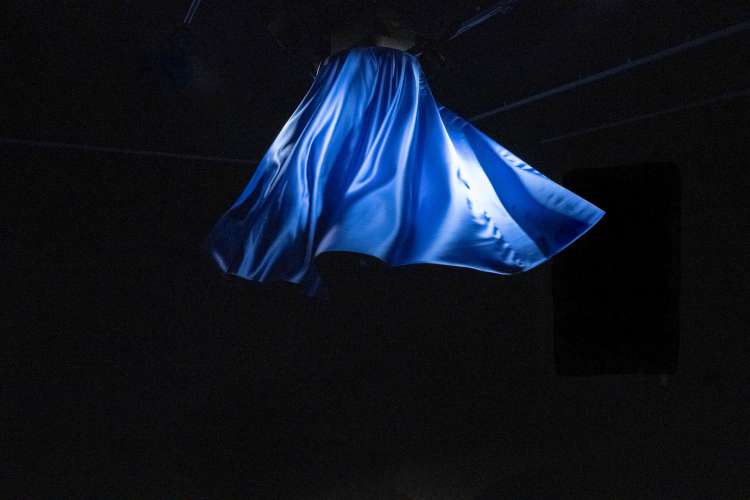
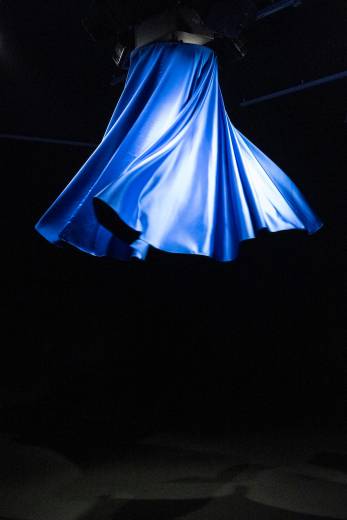
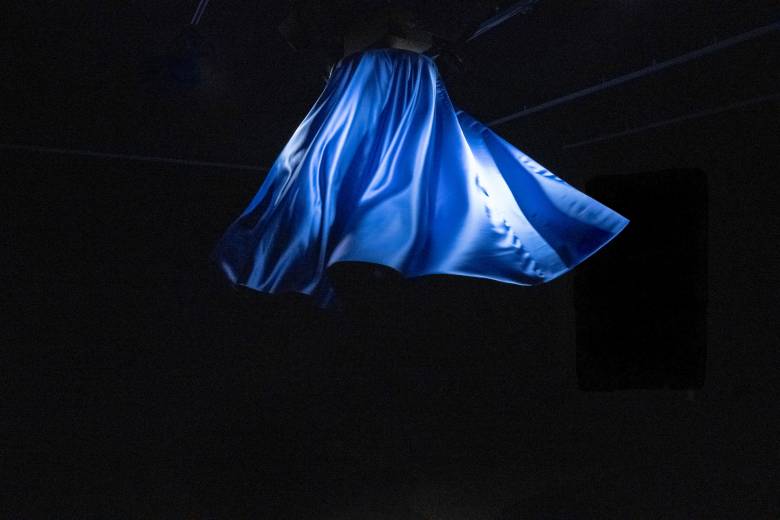
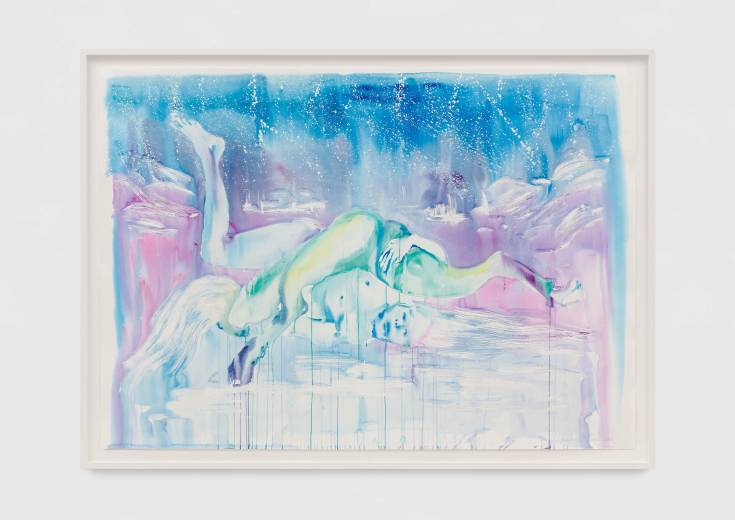
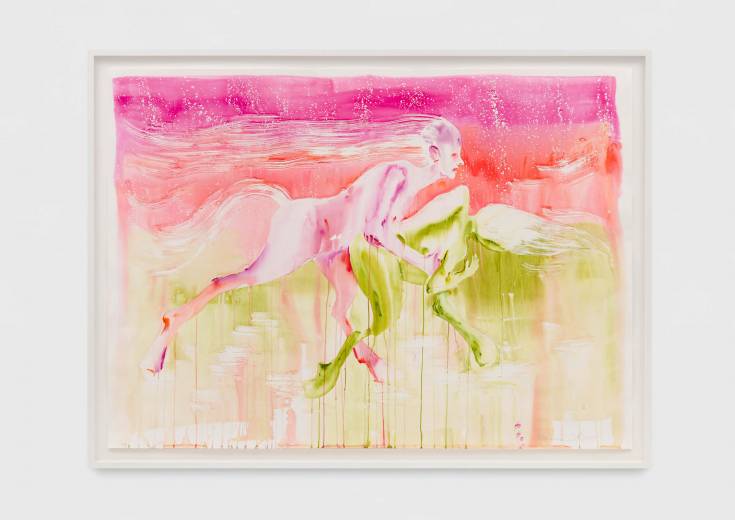
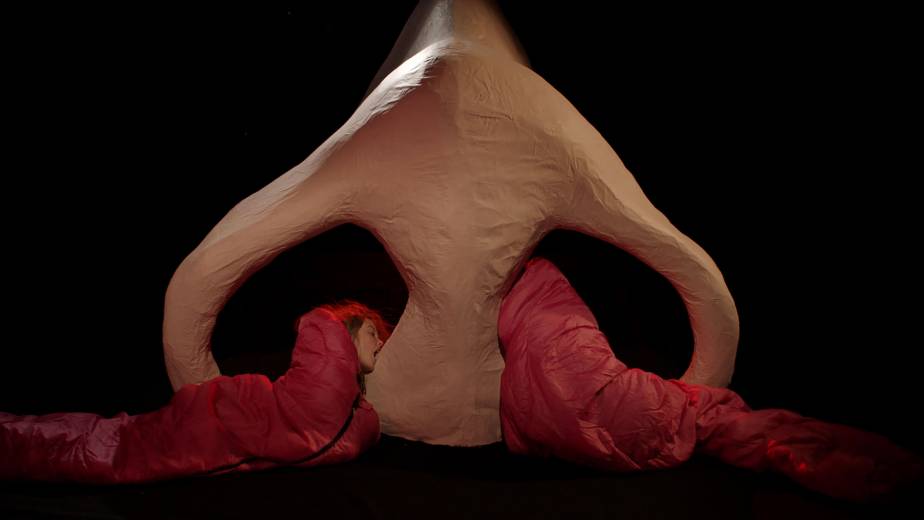
In Catherine Wheel (2026), an illuminated blue skirt spins above the viewer’s head, synchronized with the artist’s uncontrollable laughter. The sound originates from a four-hour tickling session during which Simnett was pushed into an increasingly exhausted and unpredictable state. The resulting laughter – dark, strained, and edged with gallows humour – takes on a possessed, almost satanic quality. The skirt’s relentless movement becomes threatening in its sheer persistence, exerting pressure not only symbolically but bodily, as something that cannot be stopped or escaped.
The title refers both to a historical torture and execution method – used in Europe until the nineteenth century – and to a spectacular firework associated with fascination and childish awe. This semantic ambivalence mirrors a destabilizing experience that wavers between attraction and dread. While the corporeal experience invoked by the work borders on the intolerable, the body itself remains absent. The skirt assumes an anthropomorphic, ghostlike presence, standing in for a body that is felt but not seen. This absence functions as a repudiation of the representational regimes that historically framed the female body – particularly in states of so-called hysteria – as a spectacle of loss of control. Instead of showing the body in crisis, Simnett abstracts it, while activating the viewer on a visceral level.